
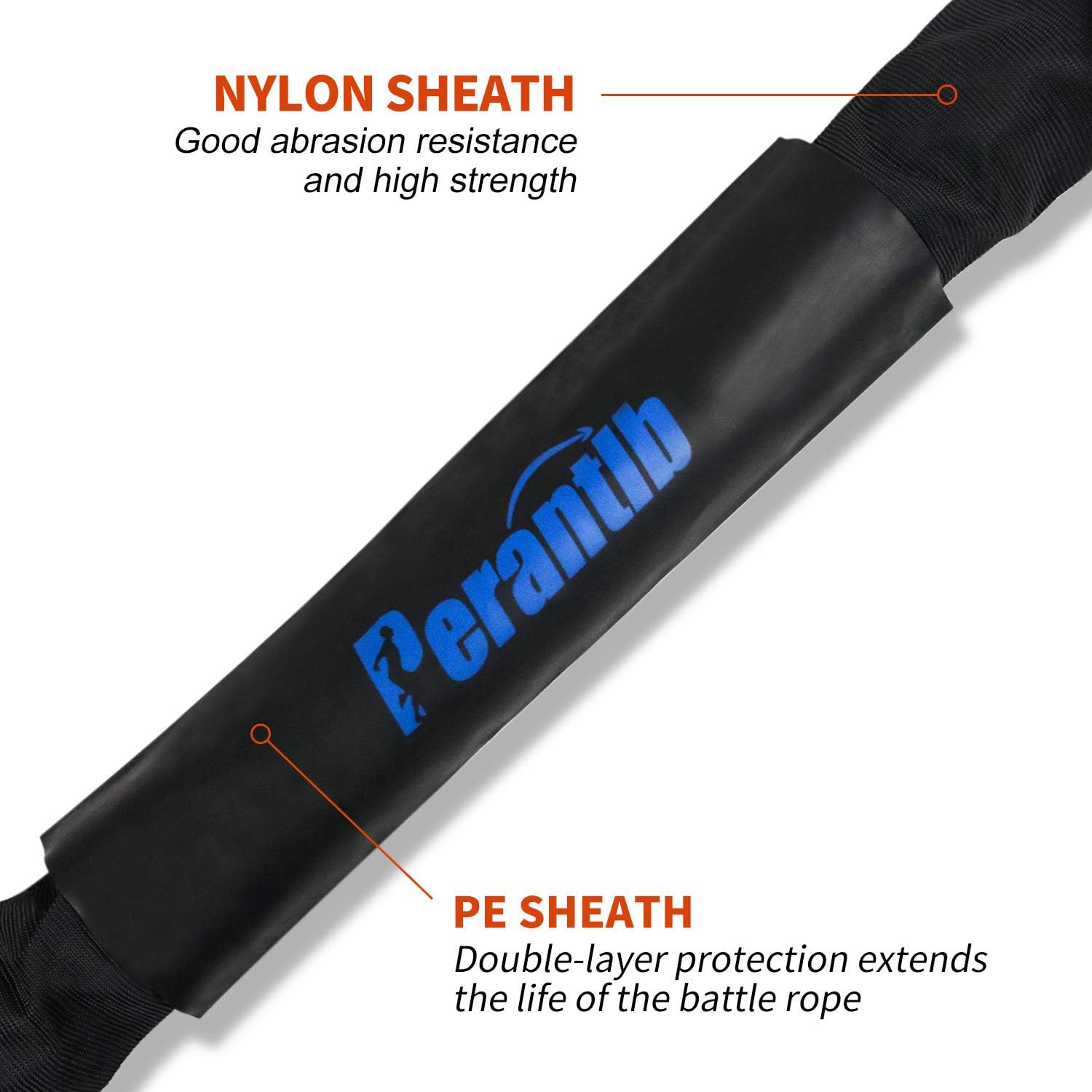
A battle rope with a sleeve, so your driveway stops shredding it
Is this the right fit?
- Best for
- home gyms, garage setups, and conditioning work where you want high heart rate without impact on your knees
- Skip if
- The sleeve adds weight and stiffness, so the rope whips a little slower than a bare one of the same diameter
- Check before ordering
- Confirm the dimensions, exact model, included parts and return terms on the Amazon listing before ordering.
Listing-based buying notes. We have not tested this product hands-on. Confirm the selected size, seller and current terms on Amazon.
Compare other gym gear — workout equipment & fitness finds →- Check Amazon for shipping eligibility
- Check the item's current return terms
- As an Amazon Associate we earn from qualifying purchases
A poly dacron battle rope wrapped in a wear-resistant nylon sleeve, sold with an anchor strap kit. The sleeve is the whole argument: an unsleeved rope dragged across concrete or asphalt sheds fibers and starts unraveling within months, and most people train on a driveway or garage floor rather than turf. The anchor strap means you can attach it to a post, a squat rack, or a tree instead of needing a wall mount. Available in multiple diameters and lengths, where thicker and longer means harder, so a 1.5 inch by 30 foot rope is the common starting point and 2 inch is serious work. Best fit: home gyms, garage setups, and conditioning work where you want high heart rate without impact on your knees.
Pros
- Nylon sleeve stops the fraying that kills bare ropes on concrete driveways
- Anchor strap included, so it attaches to a post or rack without a wall mount
- Multiple diameters and lengths, so you can match difficulty to your level
- High-intensity conditioning with essentially no joint impact, unlike running or jumping
Cons
- The sleeve adds weight and stiffness, so the rope whips a little slower than a bare one of the same diameter
Frequently asked questions
What length and thickness should a beginner start with?
1.5 inch diameter at 30 feet is the common starting point. The 2 inch is significantly harder to move and 50 foot lengths add a lot of weight, so most people who buy those first end up training shorter sets than they wanted.
Do I need a wall anchor, or can I use it anywhere?
The included anchor strap wraps around a post, tree, rack upright, or heavy piece of equipment. No drilling required, which is why it works for renters and garage gyms.
Can I use it outside on concrete?
That is exactly what the nylon sleeve is for. Bare rope on concrete wears through quickly, and the sleeve takes that abrasion instead.
How much space does it need?
Roughly half the rope length in usable floor space, since the rope folds back on itself from the anchor. A 30 foot rope wants about 15 to 18 feet of clear run.
More from this category


